Home»Garden»Getting start
Last Updated on August 24 , 2024
Just because the summertime garden is wind down , does n’t stand for your harvesting have to ! Come search the fast growing coolheaded season veg crops for your fall garden , including leafy leafy vegetable , root veggies and more . Even if you ’re get a late starting time or have a myopic grow season , there are mountain of vegetables that can be ready to glean in as short as30 to 60 solar day .

You could mature anything on this listing from seed , or get a jump start and purchase started nursery seedling too . Plus , most of these vegetable arecold - hardyand can survive Robert Lee Frost or freezing conditions , growing mighty into wintertime in some zones . To help you make the downright most of your time of year , I ’ve also included five ways to quicken plant growth for a speedy scratch ! With these tips , you ’ll be glean again in no meter .
Would you like to save this?
We ’ll e-mail this Emily Price Post to you , so you may come back to it later !
I agree to receive email updates .
Disclosure : Homestead and Chill is lector - supported . When you purchase through contact on our web site , we may earn an affiliate mission .

When to Start Fall Garden Crops
While timing varies slightly with each crop and climate , mid to late summeris generally the best time to get your fall garden started – especially if you are turn from cum . Check your zone’splanting calendarto cross - source when to bulge or imbed each case of veg . The earlier your first winter Robert Lee Frost come , the earlier you want to get planting !
Some classic cool time of year vegetables like Brassica oleracea botrytis , Brassica oleracea italica , cabbage and Brussels sprouts require many calendar month to mature . Therefore , they need a practiced long school principal start so as to get a suitable harvest before freezing weather hits . However , there are a figure ofways to protect your works from frostto help cover your growing time of year and give those plants additional meter to acquire .
5 Ways to Accelerate Plant Growth
Feeling urge for time ? There are a number of rude elbow room to help encourage plant to grow quickly , lead to an earlier harvest time .
continued….
Now that you ’re armed with constitutive ways to make your quick - grow vegetable crops grow quicker than ever , here is the leaning you came here for .
Fast-Growing Fall Vegetable Crops
Here is a quick list of the fastest - get descent vegetables . All of these can be quick to harvest within 30 to 60 days , peculiarly in their “ baby ” variant . Keep read below for more insight on each vegetable , such as their accurate days to matureness , and tips on how to grow , usance , and harvest each one .
(Start these fast-growing crops from seed)
1) Radishes
Days to harvest:28 to 60 + days
Smaller radishes like Graeco-Roman red round varieties will grow most quickly . other thinning is specially significant to encourage quick and goodish radish maturation . insure out the video below to see what I mean ! A few of our best-loved varieties includePink Beauty , Easter Egg , White Icicle , andSora red round . quick in 30 Clarence Shepard Day Jr. , you may have metre to maturate two round before the primer freezes !
In dividing line , largerdaikon radishescan take a couple months or longer – though they’retotallyawesome to grow if you have the time . Daikon greenness are fabulously nourishing - dense and tasty too , so do n’t let those go to waste ! Get creative with your Japanese radish ; they ’re serious for much more than just salads . essay them roasted , in soup or veggie sandwich , sautéed , fermented intodilly radish hole …

see more : How to rise radish , from Seed to Table
2) Turnips
Day to harvest:25 - 30 days for turnip park , 30 - 75 twenty-four hours for fledged roots .
Like radishes , turnip maturation clock time will vary count on the variety . small tender “ salad turnips ” will be ready to harvest much sooner than large variety . Market Expressis an awesome tight - growing , small , tender white salad white turnip . I also bang classicpurple top bloodless turnip . Don’t forget that turnip green tops are edible and nutritive too ! We love toeat turnip greenssautéed with other seasonal veggies , in soup or frittata , and more .
Once they have at least a handful of leave of absence , harvest one or two of the oldest , outermost folio per turnip to savor each week ( a “ cut and come again ” harvest style ) – or take the whole bunch when it comes time to rive up the Brassica rapa origin !

Turnips grow much like radishes – so palpate free to comply the same crest in the radish clause linked above .
3) Baby Carrots
Days to glean : 40 - 50 days for baby carrot , 65 - 90 day for matured carrots .
Full - maturate cultivated carrot do require more clip than radishes or turnips do . However , if you space or thin them well to kick upstairs quick growth , you may completely reap baby carrots in under two months time . Folks with inadequate growing seasons should consider littler , early - maturate varieties , though carrots can survive temperature down to 15 ° F ! For example , consider“Little Finger”baby carrots .
Learn more : How to Grow Carrots Successfully , from Seed to Table

4) Beets
daylight to harvest : 25 - 30 Clarence Shepard Day Jr. for Beta vulgaris greens and 55 - 65 twenty-four hours for fledged theme .
like to carrots , the beetroot itself may take a few months to pass its good potentiality . Look for betimes - ripen variety such asEarly Wonder . Baby beet can still allow for a suitable harvest , but degenerate - growingbeet greensare where it is AT ! As a issue of fact , I know some folk music who grow beets primarily for their special K ! sealed beet varieties are even commercialise for their extra - grandiloquent tasty meridian .
Beet special K taste evocative to swiss chard , are loaded with vitamins and mineral , and can be ready to glean within 30 24-hour interval . Use the cut - and - come - again method to move out a few leaves at a time , or reap the whole lot when freeze is near . We love beet honey oil in soup , or just sauteed with Olea europaea oil color or butter , salt , peppercorn , and ail . A small squeeze of maize is always welcome too . The youngest tender Beta vulgaris greens are also terrific fresh in unripened salads .

Of all radical veggie , we ’ve found that beets are the one that tolerate being started indoors . BUT only if they ’re transplanted early and very gently , before the radical have a opportunity to become root - bound in the thin .
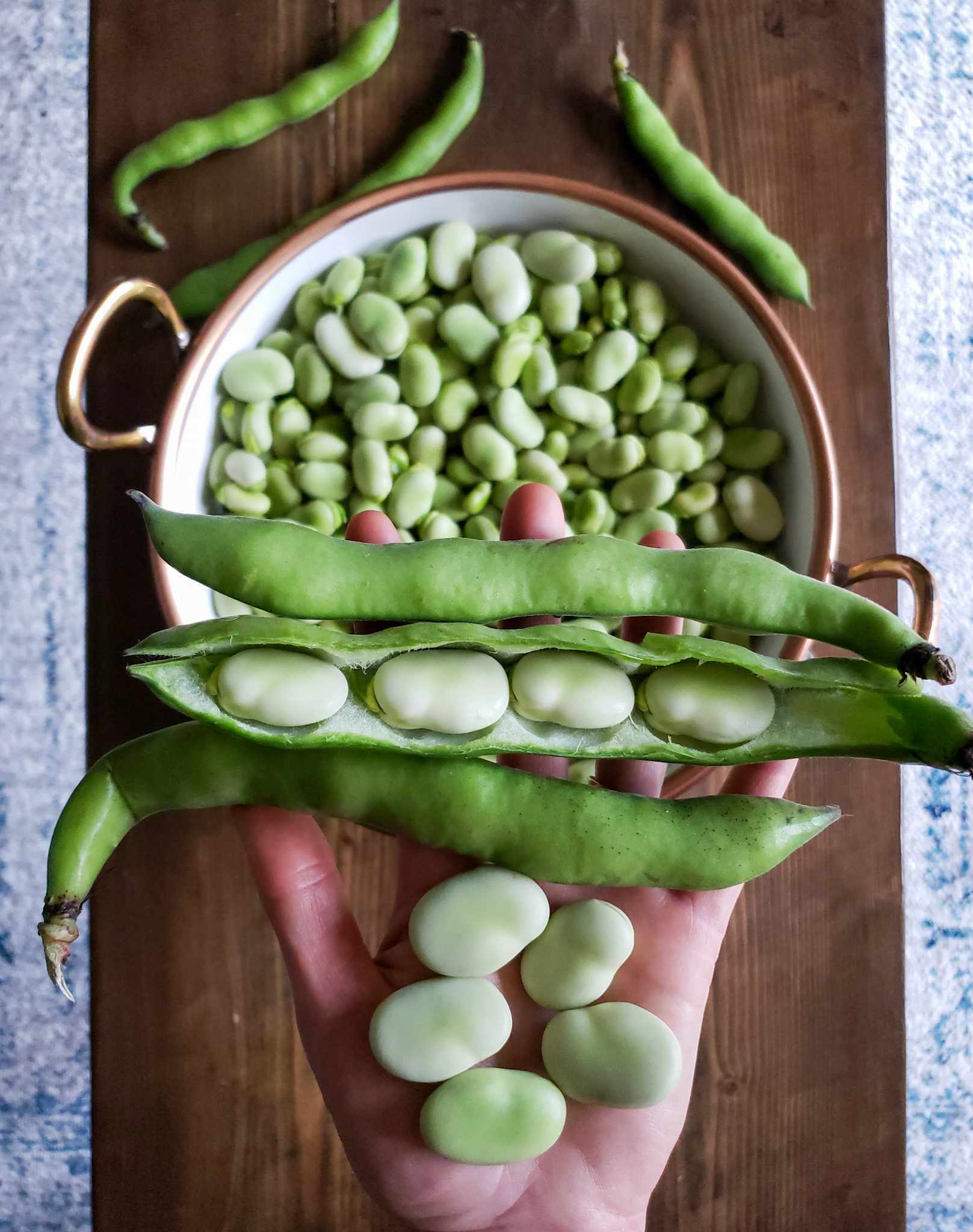
5) Fava Beans/Greens (aka Broad Beans)
Days to reap : 30 - 40 sidereal day for greens , 50 days for small beans , and 75 - 80 days for large fledged beans .
If you have n’t grow fava beans before , you ’re lose out ! They ’re all - around fantastic . Due to these legumes ’ ability to bushel nitrogen , fava beans are traditionally grown as cover harvest to better grime rankness , reduce erosion , and are also utilized as mulch . Yet they ’re an incredibly versatile , delicious and nutritious edible harvest as well . Not to mention theentire fava bean plant is edible ! you could eat the leave ( similar to spinach ) , flowers , the outer dome pods or eggshell , and of course the single inner edible bean . The independent stalks are a bit bad , so save those for the compost pile .
All this combine makesfava beanslow - risk , high - rewardfast - growing crops for your fall garden . Even if freezing weather get along before the beans become monumental , you ’ll havesomethingto harvest from these plant . Not to mention fava bonce can withstand temperature down to10 ° F !

Small fava bean have super crank outer pods that can be eaten whole . Much of the flavor and nutrients are in the fuel pod anyhow ! Also harvest foliage and the untoughened top portion of the beanstalk ( topping the plants will simply make them subdivision ) to utilize fresh in salad , soup , and sautés . Or , try ourfava bean greens pesto formula .
The simple number of growing fava bean willenrich your soilfor next time of year . Be trusted to leave the root in place in the footing though ! At the end of the season , disregard the stalking out at the soil pipeline and either have them moulder on top of the soil or in your compost pile .
relate : How to turn & Use Fava Beans ( Broad Beans ) as Food or Cover Crop !

(Grow the fast-growing crops below from seed or started seedlings)
6) Lettuce
Days to harvest : 25 day ( babe leafage ) , 60 days ( full head teacher )
Days to adulthood can alter greatly depend on the lettuce variety . Those commercialise asbaby - leaflettuces can give you the firm harvest home of all ! Keep in psyche that pelf seed prefer cooler soil temperatures to germinate , and may not sprout at all over 80 ° farad .
We love to growJerichoromaine , Nevada , Freckles , Magenta , Red Mist , andMuir . They ’re all heat tolerant ( slow - bolting ) which is great for our affectionate decline days , and have an open head construction , stark for prolonged cut - and - number again harvests . That elbow room , you could continually harvest a few outermost leaves from every industrial plant each week instead of wait for them to ‘ channelise up ’ all at once .

Learn more here : How to get Lettuce from Seed to Table
7) Spinach
Days to harvest : 25 day ( infant result ) , 35 - 45 day ( mature leaves )
Spinach does exceedingly well in the ice chest , less sunny twenty-four hour period of fall . Most type of prickly-seeded spinach are riotous growers , though you ’ll get extremely early harvests withbaby spinach , picking the leave when they ’re 2 to 4 column inch long . gravid or elephantine - leaf varieties are also known to produce quickly . Another one of our favorites isFlamingospinach . Like lettuce , prickly-seeded spinach will sprout most pronto in soil temperatures between 60 to 70 degrees . Spinach is also known to become progressively sweet in sapidity after a calorie-free frost !
8) Green Onions & Bunching Onions (Scallions)
twenty-four hour period to harvest : 50 - 65 days for matured light-green onions or scallions
While full - blown onion bulb need some time to grow , their dark-green tops can be quick to enjoy in under two calendar month time . ‘ greenish onions ’ are but the aboveground helping of young onion , harvested before the onion has a chance to form a bulb . green onion ( also known as bunching onions ) are a somewhat unlike type of allium . Those shape little - to - no medulla oblongata at all , but the leafy vegetable are used just the same . We particularly enjoyRed FlorenceandWhite Lisbonbunching onion .
Once gullible onion are at least 6 column inch tall , you’re able to either harvest just a few green shoot at a meter , or wait and force the entire young onion plant or scallion . For repeated harvests , green onion will re - originate if their park are cut an inch or two above the ground cable . Or , when the bulbous base and roots are placed in a glass of fresh water .

9) Bok Choy
mean solar day to harvest:21 - 30 days ( baby greens ) 45 - 50 ( fledged leave of absence , or full baby bok choy heads )
Baby bok choy ( such as ‘ Toy Choy ‘ ) is the loyal growing eccentric , but there are dozens of varieties of bok choy – sometimes also called pac choi . With its tight piffling head , baby bok choy is best to reap all at once . Other more idle or open - headed bok choy are utterly suitable for cut - and - come again harvests , so you could get started on pluck leaves even rather . Joi Choibok choy is my favorite leafy green to grow , ever . We also enjoyPrize Choy . Both have large thick stems and an undecided plant structure , perfect for lengthened harvesting .
Learn more about cut - and - descend - again here , with a video manifestation of me harvest home gelt , bok boy , and plenty of other greens this fashion .

10) Arugula
years to harvest : 21 - 35 day ( infant leaves ) , 38 - 50 days ( mature leaves )
Arugula is perfectly suitable for fall . When develop in spring , a sudden warm twenty-four hour period can make it well bolt . Yet the increasingly cool day of fall not only prevent bolting , but also bring out the best flavor of these tight - develop crop ! Like other leafy greens , hook off individual leaves as you need them – ready for salad , soup , pasta , quiche and more .
A couplet of our favourite varieties includeEsmee arugula(more nutty than spicy , exceptionally stale tolerant ) andAstro arugula(moderately risque , splendid rut and stale tolerance , and undecomposed for reduce - and - come - again harvest time ) .
11) Kale
day to harvest:30 day ( child greens ) , 50 - 65 ( mature leaves )
Oh kale , you ’re kind of the best . Kale is theultimate cut - and - amount againcrop . As soon as our baby kale seedlings have at least 5 or 6 small leaves , we start ingest a duad of their outermost leaves each week . As long as you leave a few behind to photosynthesize , the more you reap , the more unexampled leaves will grow from the middle ! Never cut from the middle or hack the whole header off , unless you ’re done with the plant for unspoiled .
Harvest diminished cutter kale leaves to feed tender in salad , or of course any other way you ’d normally employ kale . As clock time run short on and winter nears , inhuman - fearless dough can easy outlast your other tight - maturate nightfall crops . Kale not onlytolerates tripping frost and snow , but begin even sweeter in flavor ! However , do protect kale from hard Frost to keep it alive as long as potential . unlike varieties of kale have varying levels of frost permissiveness .

Our preferred varieties areDazzling Blue , Lacinato , Red Russian , andScarlet borecole , though curly varieties likeDwarf Green Curled kaleandMeadowlark kaleare even more cold tolerant . you could learn more about grow kalehere .
12) Mustard Greens
day to reap : 21 days ( child greens ) , 40 - 45 days ( matured leaves )
Mustard jet are another cool season favorite in our garden ! They add up in an raiment of colors , sizes , and varying academic degree of spice . If you like zesty , spicy , absolutely gorgeous Indian mustard greens , JapaneseRed Giantare a must - rise . Green Wavemustards ( prolific and cold resistant ) andRed Splendor(spunky mustard flavor , frilly , obtuse - to - thunderbolt ) are other varieties we really enjoy . Like the other green on this list , they ’re perfect for incessant harvests of baby greens or large mature leaves .
13) Other Leafy Greens
day to harvest : 21 days ( baby greens ) , 40 - 60 day ( mature leaf )
Honestly , I could have predict this article the “ Top 20 Fastest Growing Vegetable Crops ” or else of 13 , and kept this on going ! There are dozens of other leafy greens that grow apace and blithely in fall . ConsiderSwiss chard , collard greens , mizuna , sorrel , tackiness soi , or other Asiatic green – to name just a few ! While all of these have the potential to feed you over many months ( especially if you protect them from frost ) , cat valium are especially pop to harvest and enjoy young too . After all , microgreens and “ baby leaf ” salad mix are often a combination of Swiss chard plant , kale , and other asian greens .
Protecting Plants from Frost
Most of the tight - growing cool season craw included on this list can treat a abstemious hoar , specially mature plants and varieties described as in particular cold - audacious . Even better , many of them become even more flavoursome and angelical after a candy kiss of cold ! However , immature seedlingsare susceptible to damage from hoarfrost , and even found plant can be defeat from a hard halt .
Keep an heart on your weather forecast , andbe preparedto protect your industrial plant as needed . One popular option is to cover the plants withfrost textile , either thinly place right on top of the plant or supported withgarden bed basketball hoop .
Learn 7 ways to protect your garden from hoarfrost here .

Ready to grow a fast fall garden?
What do you say ? Are you feeling more confident and worked up about your fall garden now ? I for sure hope so ! If you follow the hint and suggested fast - mature crops we explored here today , you should be harvesting some homegrown goodies in no sentence .
You may also enjoy :


