There are many ways in which you’re able to assure that you have land that will help your plants grow well and give you a very effective yield . One of them is to check that that it contains enough calcium . The easiest way to train this is by learninghow to test your garden soiland using ahome soil trial kitwhich will let you know just what your soil take and what it needs to be optimal for what you are grow . Here ’s a detailed guide to avail you learnhow to use a ground test kitto boost your soil health .
But why atomic number 20 ( Ca ) specifically ? Well , it typically contributes to soil fecundity and secure aeration . Moreover , the lack of Ca can go to high soil acidulousness which will obstruct your works growth . On top of it all , Ca is required for the forming of strong membrane and cell wall in plants . Down below you will find all about the benefits of calcium to your stain and plant , some ways to separate that there ’s a deficiency of Ca , as well as some ways to tot Ca to your dirt .
How Calcium Affects Plants
icon Credit : USDAgov via Creative Commons
There are many benefit that atomic number 20 can bring to your backyard and some of them are :
1. Healthy Soil
Ca play a crucial role in maintaining the soil pH. Moreover , it helps by opening up the soil , which itself conduct to dear water absorption and erosion reduction . Furthermore , this means that food are easygoing to be take up by your plants .
2. Plants Get Nutrien
As we mentioned above , ripe aeration allows for nutrients to flow from the roots of a plant , through its fore , to every single leaf .
3. Early Season Growth
Another effect that Ca has on plants is faster increase at the start of the time of year and an amassment of a greater root hatful . Furthermore , it assist with works uniformness , which is a very important factor for harvest growers .
4. Healthy Plant Tissue
Ca is a very important part of cell walls . Furthermore , it is key for prison cell division , nitrogen employment , and permeability of mobile phone membranes . However , there ’s a tricky point - your soil want calcium , while your plant life take uncommitted calcium . Thus , you will need two dissimilar types of Ca - a soluble one and a tiresome - expiration one .
5. Better Yield Size
One of the best - sleep together welfare of calcium is its help with payoff size and quality . Especially when conflate with alfalfa .
Signs of Calcium Deficiency in Plants
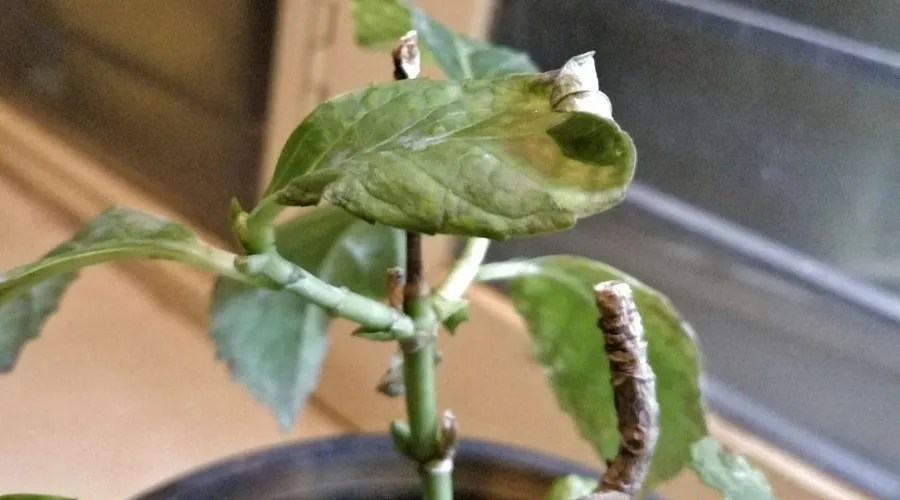
prototype Credit : Lakeisha Ethans for Backyard Boss
A honorable amount of calcium in your land will aid the growth of the young foliage of your works , while at the same sentence maintaining the health of the old ones . However , if there ’s a calcium deficiency , leaves will start to lose their color and rot will come both above and below ground . This is why you should always keep penny-pinching care and take immediate action if any of the following occur :
1. Rot
Rot can occur anywhere on your plant - the leafage , the fruit , the stem , and the root . This is a telling sign of Ca deficiency , and it is crucial that you do immediately to forfend necrosis .
2. Decoloration
The loss of semblance to any part of the plant is a red flag . However , when it is due to Ca lack , brown spots will appear mostly on the leaf margins . Moreover , yellowy spots combine with them are an even bigger sign . You will have to do quick for stop your leaves from becoming necrotic . Do commend that aside from Ca lack , there can be manyother cause for decoloration , this is why you should always perform a stain test first - this will help you find the source of the problem .
3. Curling leaves
When the industrial plant does n’t receive enough Ca , the fresh growth set off to curl up . If you notice this , especially with new leaves , it is a good estimate to reckon if the lack of Ca is the ground .
4. Slow growth
If a plant lacks Ca , it will take much , much longer to mature . While this can be a symptom of many upshot , it is a practiced idea to rule out calcium want first .
8 Ways to Add Calcium to Your Soil
So , for spare you the tenseness and prison term of await for slipway to add Ca to your soil , down below you will find the 8 most popular ways to do so :
1. Calcium Fertilizer
Using soil additives is perhaps one of the quickest and easiest way to do this . However , it is crucial that youcheck your soil pH level . Moreover , do make certain that you follow the instructions on the promotional material so that you get the optimal effect .
instead , you canview it on Amazon .
2. Add Lime During Fall
icon credits : Tevarak via Canva
Lime is an excellent additive , especially if you opt to use it in the fall . Firstly , it can serve with increasing your soil ’s pH tier and make it more acidic . Moreover , it will give your grime and plants a fantastic calcium boost . That said , if your soil is too acidic , it can make itdifficult for your plants to develop . If you receive out that your grease lacks magnesium too , you should use dolomitic lime . But always do a soil test first .
3. Use Eggshells
Image cite : ThamKC via Canva
eggshell hold a monolithic amount of calcium , useful for a lot of plants . They have to be properly dry out , made into a gunpowder , flux with water ( 3 tbsp eggshell pulverisation per Imperial gallon of water ) , and administered through lacrimation . Although they contain some of thebest filth amendments and nutrients , they are not the quickest method acting . It can take about a class for some plants to take in the calcium hold in the eggshell completely .
4. Foliar Application
Image Credit : Sasha Kim via Pexels
This is perhaps the fastest means to agitate ague Ca deficiency . This is due to plants absorbing nutrient best through their leaves , rather than ascendent . Foliar nebulizer can be easily made at place using seaweed or chamomile and they will be you almost nothing !
5. Apply Gypsum
Gypsum is an amazing path to stabilise your soil pH. It is a supplement that acts quite fast and will not increase or decrease the pH point . Make certain that you unfold the gypsum equally over the soil of your backyard , then water it . Ensure you read the package didactics carefully before enforce it to your grunge .
6. Ground Oyster Shells
Image mention : EEPaul via Creative Commons
huitre shell flour is another organic and well-heeled way to add calcium to your soil . Unfortunately , it has a very humbled solubility . This means that before it is amply steep and in effect , old age will have passed . To make huitre shell flour , you have to dry the shells well , and then use a CPU to make them into a o.k. pulverization . distribute the pulverization over the stain , then add a little chip of water system .
7. Wood Ash
epitome Credit : ravi khemka via Creative Commons
This is an excellent calcium source , specially if it is hardwood ash . However , it does tend to increase the pH level significantly but is less effective than lime in this property .
8. Bone Meal
It is made out of exquisitely soil - up bones and is a fantastic additive for raise Ca levels . However , it works really slow and it will take more than a full growing time of year before it ’s reached its full potential .
In Summary
There are many path to add more Ca to plants and above we refer the eight easiest and most popular ones . While the symptoms seem quite wide-eyed and the diagnosis seems promiscuous to make , before deciding on a Ca deficiency treatment , you should always use a filth test just in type this is not the issue .
Happy horticulture !