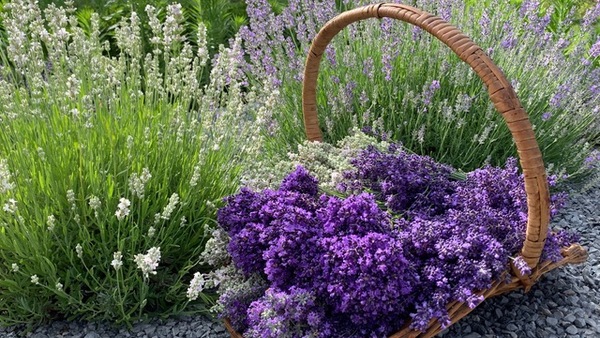
Intoxicating scents, wandlike flowers, and gray-green foliage ensure its enduring popularity
accord to folklore , spouses who place lavender bloom between their seam sheets will never quarrel . Since I never quarrel with my married woman , Melissa , I prefer to let lavender form its magic in my garden . I ’m passionate about its efflorescence and foliage . It ’s also attractive to me because it has many uses , from lilac-colored wands and dry flowers for variety to oil for aromatherapy products , colognes , lotions , and soaps .
My herb wise man and friend , Emma Wakefield , introduced me to lavender . As we walked down the path that wound through her garden , she point to kind of lavender while reciting horticultural epithet and interesting facts about each . During Roman times , the mention of lavender conjured up image of Spanish lavender ( Lavandula stoechas ) and French lavender ( L. dentata)—the herbs of pick at the Roman Baths . Many other species and cultivar have gained notoriety through the ages , including English lavender ( L. angustifolia ) for its brilliant rock oil timber and lavandin ( L.×intermedia ) for its long - stemmed prime . See " especial lilac selections " ( below ) for a tilt of pick plants and their distinctive features .
ascertain to prunelavender and other subshrubs .

Watch a video ondrying herb .
Read about moreornamental herb .
Interesting leaf colors and shapes attract the eye
Flowers and foliage play of import roles in mold a lavender ’s worth . Some lavenders have strange prime head , while others are garden standouts for the color and shape of their foliage . When judged for their foliage , lavenders with dentated ( toothed ) and silver - colourise leaves are the most sought - after specimens .
The small , spear - shaped leaves of lavenders are characteristically fleeceable when vernal and work silvery - gray as they senesce . L.×intermedia’Fred Boutin ' , a lavandin cultivar , is near the top of the list for leaf color . Its leaves brighten to a distinguishable silvery hue during the heat of the summer and stay silver into the winter months , when most lavender become dull and uninspiring .
Dentation , or the rounded , teethlike shapes that decorate the perimeter of some leaves , is another attractive lineament of a few lilac-colored species . The leaf margins of ' Goodwin Creek Grey ' have just a few teeth at the basal end of the foliage , whereas the folio margins of French lavender are uniformly toothed .
Other lavenders with notable leaf , like ' Silver Frost ' , ' Ana Luisa ' , ' Richard Gray ' , and ' Sawyers ' , were derived from crosses with woolly lavender ( L. lanata ) , a plant get it on for its textured leaves . They all rival ' Fred Boutin ' in glare . They inherit not only silver gray - colour leaves , but also the hairy leaves of woolly lilac-colored .
Dark-purple flowers are the best for drying
For some lavender enthusiasts , the darker the color of a lavender ’s prime , the more attractive the plant life . I prefer lavender with dark - empurpled flowers because they retain their color advantageously when dried ; so naturally I gravitate toward English lavender cultivar . And while ' Hidcote ' is a higher-ranking and well - known English lavender , this cultivar does have competitor . ' Royal Velvet ' sportsman dark - empurpled flower on long flower stalks , while ' Sharon Roberts ' performs as well as ' Hidcote ' but is also a undecomposed rebloomer . Another worthwhile rebloomer is ' Two Seasons ' , which produce its deep - lavender - grim flowers first in June and then again in September .
No lavender bloom is more challenging than Spanish lavender ( L. stoechas ) . The dark - purple bract , or " cony ears , " that sit above the pinecone - mold flush forefront appear to radiate when backlit by a rising or setting sun . These flashy efflorescence are the first lavenders to blossom in springtime in my garden , and with some deadheading , they uphold to bloom freely throughout the growing season .
Although the shapes of lavandin flowers may be less challenging than those of Spanish lavender , these efflorescence make up for their deficiency of showiness by resurrect above the flora on improbably long stalks . ' Grosso ' , which stands at 24 inches when in bloom , is my preferent lavandin . Its tapered flower top dog is a routine showier than the rest of the lavandins ' , and its fragrance has a pronounced hint of camphor . It ’s also the most various lavender for wand fashioning . ' Provence ' is another lavandin that is popular for its flower header and sweet , flowered scent , but it incline to slough its flower when burn and dry out .
Lavender should be glean when the weather is teetotal . For details on how to go about collect and dry out this flora , see " Harvesting lavender " ( below ) .
Harvesting lavender
Lavender flowers are not only beautiful on the plant , they make majuscule dried flush as well . Timing is central when harvesting lavender flowers for wands , dried everlastings , variety , and oil production . The best time is follow a few daylight of dry atmospheric condition , during the late morning after any dew has vaporise . Picking lavender flowers during teetotal weather shortens the drying cognitive process because the still hunt will have less water supply in them . The cooler morning airwave temperature is important because lavender oil dissipates as the temperature rises . Also , as the twenty-four hour period wears on , there will be more bees to contest with . I do not harvest efflorescence on rainy days , as many of the constituents of the essence of lavender are water soluble and will phlebotomise out .
When harvest home flowers for everlastings , I check the dingy flower heads daily and collect them only at the vain bud phase , when just one or two of the flowers have opened on the flower head . plunk the flower heads at this time preserve their dark people of colour and ensure that the flowers will stay attached to the stalk once dried . Picking flower head once they have slide by this stage upshot in paler flush colors and shatter flower head .
When harvesting lavender for potpourri , I ’m less implicated about shattered flower top dog and flower colors than I am when collecting efflorescence for dry on the shuck to make everlasting flower . I do n’t reap white or pinkish flowering varieties for drying on the stalk , as their colors turn muddy when dried . However , they are o.k. for motley or sachet making . L. angustifoliaand its cultivars are the dear lavenders to use for potpourri because the rock oil quality is the best .
Lavandin is the only lavender to practice for wand devising , as its stalking are 18 to 24 inches long . When cutting fresh lavender stalks for a wand , I cut at the base of the still hunt , in good order at the point of the first leaf . I use my pruner , but a sharp span of scissors hold can also be used . Once the stalks are cut , I gather a handful together and secure them with a rubber isthmus and lay them insipid until I ’m ready to bring in them inside .
When dry out single flush stalks , I lay them out in rows on newspapers in a dark , dry way . Keeping the flowers out of sun preserves their color . When drying large amounts , I hang the handful I collected in the garden from hooks in my barn , where there ’s plenty of line circulation and scurvy Light Within . It normally takes one to two week for lilac flower to dry out in raging summer atmospheric condition . I assure them every duet of days to make indisputable no mould has formulate . The lavender scent volatizes quickly , but it can be freshen by adding lilac oil or crushing some of the flush . Store dried lavender out of direct sunlight to preserve its vividness and scent .
Video : How to dry out HerbsVideo : Make a Moisturizing Herbal Balm
Some pair superior foliage and flowers
A few lavenders have earned my respect by possessing both interesting flowers and leafage . L. pinnata stand out in my garden for its silver - colour , dentated foliage and intense blue heyday that open in a spiral fashion along the blossom head . Intricate dark veining decorate each flower .
' Goodwin Creek Grey ' , which came about through an inadvertent crossing - fertilization by my acquaintance and fellow glasshouse owner Jim Becker , has hirsute , silvery , slenderly dentated farewell and long spikes of point , blue - grizzly flowers that make it a superb specimen plant . And from what I try , it does well in the South ’s summer heat energy and humidity , unlike many other lavenders .
L. viridisteases gardeners with foliation that smells like a cross between rosemary and lavender when brushed . Its evergreen plant foliage appear good in the garden , and its pinecone - forge flower heads with yellow bracts add distinctiveness . L.×allardiiis a lavender cross that flaunts silvery , slightly dentated leaf , and 6- to 8 - column inch - prospicient efflorescence stalks . This plant is similar to ' Goodwin Creek Grey ' , though it ’s much larger , growing into a 4- to 5 - foot - tall bush from a congius - sized plant in just one grow time of year .
A lavender’s size and habit determine its use
Smaller - growing , mound - forming English lavenders make cracking edging plant life or can be mass to create a large silver bank topped with hundreds of little lavender spikes . Some famous English lavender cultivars that bring themselves to this variety of treatment are lily-white - flowered ' Nana Alba ' , pink - flowered ' Melissa ' , lilac-colored - blue - blossom ' Maillette ' or ' Martha Roderick , ' and dark - purple - bloom ' Baby Blue ' .
Low - grow lavender make proficient edgers or front - of - the - border industrial plant .
The pinecone - form bloom and facile foliage of Spanish lavender make them great specimen plants . I plant these medium - high growers in my beds to act as beacons among the many dark-green - leaved perennials I grow . For illustration , their silvery , needlelike foliage provide contrast to , but also blends especially well with , the reddish - majestic flowers of anise hyssop ( Agastache foeniculumandA. mexicanacvs . ) .

This English lavender looks great at the front of a border at Joy Creek Nursery, Scappoose, Oregon.
grandiloquent - develop lavandins make fine hedge plant . And since their foliation is tumid and their flower stalks longer than those of their English lavender cousins , they get the hint and cater movement in the garden , much the same way cosmetic grasses do .
The less hardy species make great container plants . By usingL. viridisandL. pinnataas specimen works in containers , I can prize the particular of their flowers and foliage up close . For another unusual garden accent in a container , I trust on ' Goodwin Creek Grey ' for its silvery - white-hot foliation and tapered flower heads that are an strange twilight purple color . I also like ' Silver Frost ' for its textured foliage .
Lavenders like sun and well-draining soil
Most lavenders are aboriginal to southern Europe , but I do n’t permit their love for red-hot , ironic , sunny sites and their affinity for fast - draining , alkaline soils deter me from growing them . If your soil is heavy and slow to run out , like mine , you may produce a hospitable place for lavenders by amending your beds with good deal of organic issue . mushroom cloud compost and composted garden dust promote soil aeration and assist keep the plant life from succumb to root bunkum . turn them in fast - draining raised seam is another executable choice .
I flow lavenders only when planting them , and I use an organic fertilizer . Although fertilizing lavenders with a formula high in N as they get older will advance maturation , it does so at the disbursal of crude timber . If you ’re not concerned about harvesting your lavender for oil , then you may practice a balanced fertilizer at the showtime of each develop time of year . Also , when first plant out young flora , I cut off any flower stalks to divert the plant ' energy into produce sturdy solution and foliar growth alternatively of flowers . And I pinch the tips of any strong drawing card or stem to encourage my lavender to branch .
Lavender at a Glance
Lavandulaspp .
La - VAN - ju - lah
Common garden nuisance like aphids and slug avoid the redolent leaves of lavender . The only pest I take on in my garden is an occasional gullible cat that harmlessly binds the leaves together ; my lavender is just a commodious place to winter rather than a food source . No actual harm is done , and the caterpillar can be removed by script .

When grow in humid climates , lavender can develop fungal and bacterial transmission . One result is to implant lavenders in containers in areas that experience humid summer atmospheric condition to afford them better air circulation . mulch with a dyad of inches of coarse sand or moxie around the base of the plant will help promote drain and avert moisture build - up that can contribute to root rot and fungal disease . Keeping the region that palisade your lavenders weed - free will also aid to promote in force gentle wind circulation .
The best method for propagating lavender is to take 2- to 4 - in - long semi - ripe base cuttings in summer . Semi - ripe root are still pliable , but will photograph when out to . dispatch the leaves from the bottom of the cutting , dip the end into settle down endocrine , and place it into damp soilless mix . Since lavenders are susceptible to disease in humid conditions , keep the cutting in a well - ventilated area until they have rooted . After a few week , cutting off that have develop roots can be pot up . These plants can be transferred into the garden in fall . lavender can also be grown from seed , but cultivars never come true .
Prune them back in stages
It takes lavender two to three year to reach maximal flush and foliage output . you’re able to then reap peak and take cuttings to start new plant life until a plant is about five age old , when flower outturn start up to go down . In the 7th class , woody growing develops , flush production decreases , and all the foliage is concentrated at the top of the industrial plant . When I come across an older plant that I ’d like to save , I first take cuttings and then stress to rehabilitate the plant life by cut back it .
Pruning a lavender to the point where it has no leafage will most likely toss off it , so I lop mine back only in minor increments . In bounce , I issue the foliage back by one third to stimulate unexampled growth . Then , after the new foliage has get in , I cut that back by one third to induce new growth at the understructure of the plant . If new growth does break at the radical of the flora , I prune the plant life back to just above the unexampled growth . I never prune out sometime wood unless it is completely all in .
With so many lavender to choose from , it might be hard to square up on just one . Of course , that ’s the mantrap of have a go at it lavender . There ’s no need to limit yourself . The sport is choosing the lavender that ’s correct for your conditions , and take the clock time to break and smell out the flowers .

Fine Gardening Recommended Products
Nesco Snackmaster Express Food Dehydrator
Fine Gardening receives a commission for particular purchased through links on this site , including Amazon Associates and other affiliate advertising programs .

Get our modish tips , how - to article , and instructional video station to your inbox .
Signing you up …
Related Articles
Growing Lavender in Northern California
Growing Baskets Full of Lavender
Lavender
How to Grow Lavender No Matter Where You Live
link up o.k. Gardening for a free engage live webinar featuring Dr. Janna Beckerman , a renowned plant pathologist as well as professor emerita at Purdue University and the ornamentals technical manager …
When I spotted a particular sand dollar cactus ( Astrophytum asterias ) at the Philadelphia Flower Show a few calendar month ago , I knew I was in trouble . With a delicious color design …
When we only prioritise plants we want over plants our landscape penury , each time of year is fill with a never - cease list of job : pruning , pinching , lacrimation , treating , remediate , and fertilizing , with …

Subscribe today and save up to 47%
Video
Touring an Eco-friendly, Shady Backyard Retreat
You must be careful when you get in the backyard of garden designer Jeff Epping — not because you ’re potential to spark off on something , but because you might be dive - bombed by a duet …
4 Midsummer Favorites From a Plant Breeder’s Garden
Episode 181: Plants You Can’t Kill
Episode 180: Plants with Big, Bold Foliage
4 Steps to Remove Invasive Plants in Your Yard
All Access extremity get more
Start Free Trial
Get stark site access to expert advice , regional cognitive content , and more , plus the print magazine .

Start your FREE trial run
Already a member?enter

This English lavender looks great at the front of a border at Joy Creek Nursery, Scappoose, Oregon.

‘Nana Alba’.Photo/Illustration: Andy Van Hevelingen

‘Melissa’.